Episode 1.4 · 27 min
How the Atoms Were Made
How stars and stellar explosions build the chemical elements, and why the heaviest nuclei require processes beyond ordinary fusion.
Watch this film on YouTube ↗Visual credits
17 sourcesSources and credits for imagery used in this film, including material incorporated into explanatory animations.
Fraunhofer lines
Fraunhofer_lines.jpg : nl:Gebruiker:MaureenV Spectrum-sRGB.svg : Phrood~commonswiki Fraunhofer_lines_DE.svg : * Fraunhofer_lines.jpg : Saperaud 19:26, 5. Jul. 2005 derivative work: Cepheiden ( talk ) derivative work: Cepheiden ( talk )
View original source ↗Source licence: Public domainthe solar spectrum image
NASA
Cecilia Helena Payne Gaposchkin (1900-1979) (2)
Smithsonian Institution from United States
View original source ↗Source licence: No restrictionsimage
ESO
image
ESO
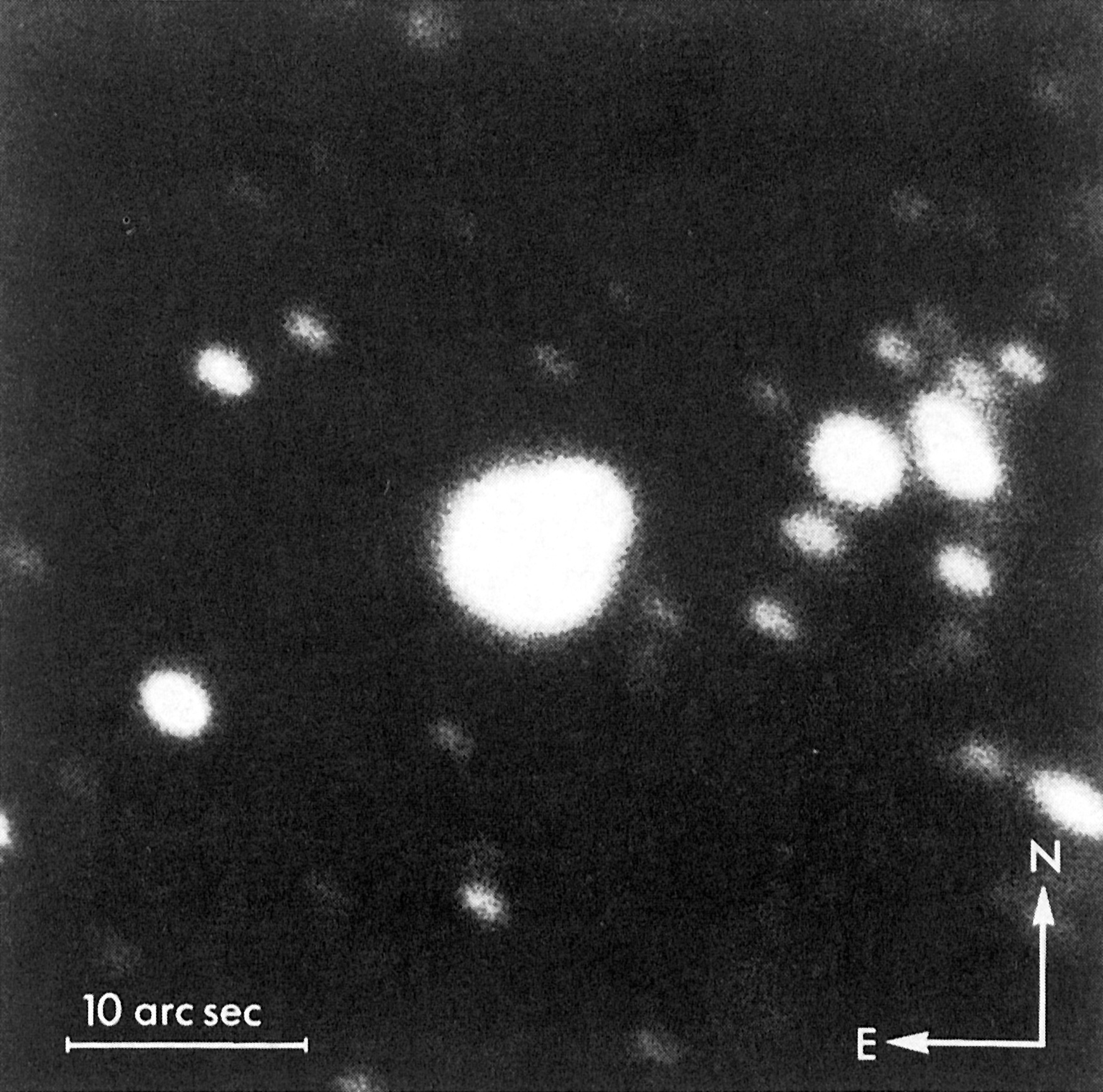
evolution of supernova 1987a image
NASA
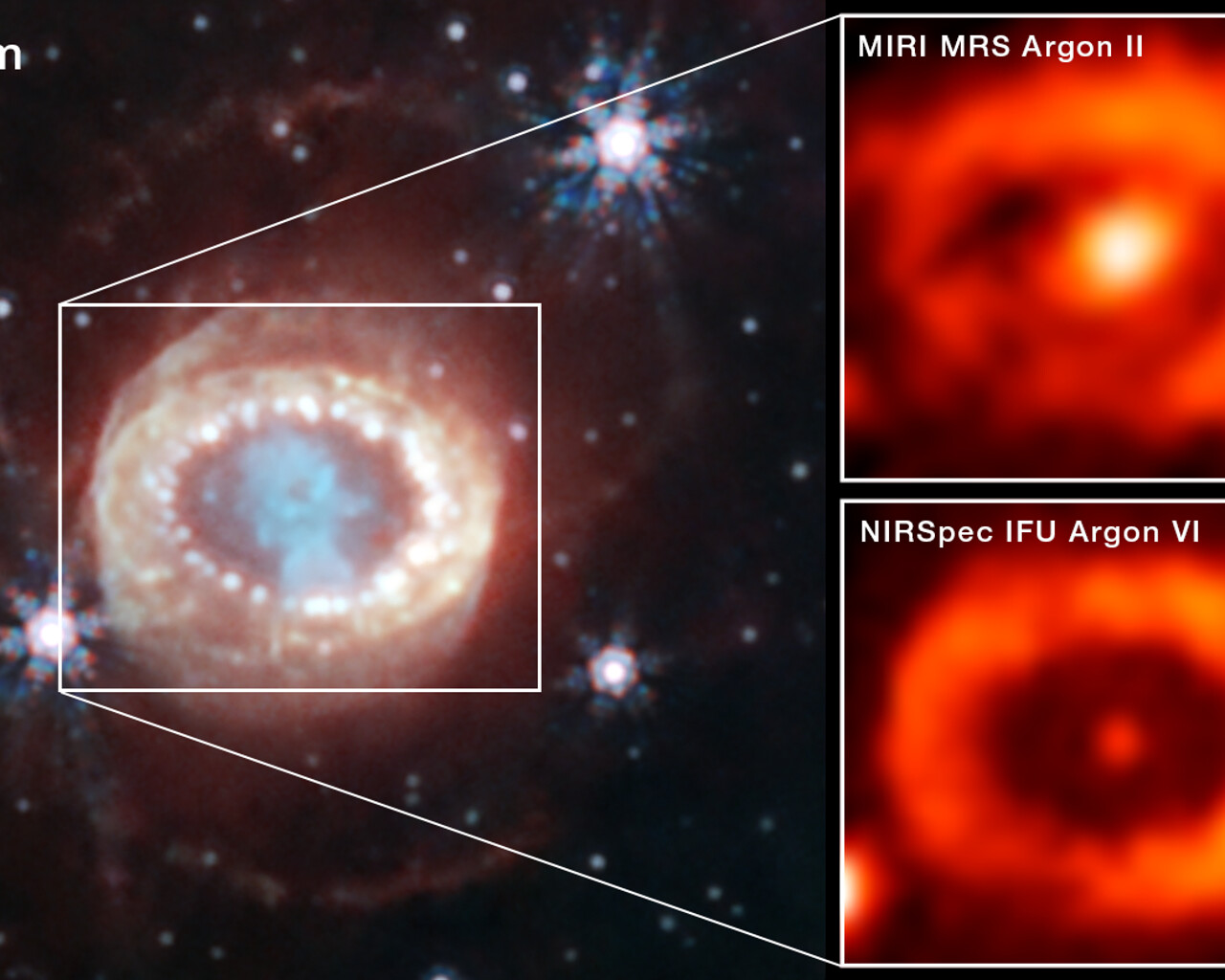
weic2404a image
Esawebb
image
ESO
image
ESO
Image result for query 'Carnegie Science Swope SSS17a discovery image NGC 4993'; source host: ziggy.ucolick.org; file: sss17a_n4993_label.jpg.
Incorporated into an explanatory animation; presentation may include cropping, labels and overlays.
image
ESO
Kilonova emission spectrum (GRB 230307A)
NASA, ESA, CSA, J. Olmsted (STScI)
View original source ↗Source licence: CC BY 4.0Incorporated into an explanatory animation; presentation may include cropping, labels and overlays.
Kilonova and host galaxy (GRB 230307A)
NASA, ESA, CSA, STScI, A. Levan (IMAPP, Warw), A. Pagan (STScI)
View original source ↗Source licence: CC BY 4.0Incorporated into an explanatory animation; presentation may include cropping, labels and overlays.
NASA’s IXPE May Have Proven 90-Year-Old Theory
NASA
Hubble reveals the Ring Nebula’s true shape
GSFC
Murchison meteorite
Art Bromage
View original source ↗Source licence: CC BY-SA 2.0Image result for query 'presolar grain Murchison silicon carbide SEM Field Museum'; source host: mpg.de; file: original-1326971914.jpg.
MPG



Animation design references 4 sources
These works informed the design of explanatory animations. A reference listed here is not necessarily reproduced on screen.
Nucleosynthesis periodic table
Cmglee
View original source ↗Source licence: CC BY-SA 3.0Binding energy curve - common isotopes
Fastfission
View original source ↗Source licence: Public domainScientific figure · source page 3
Watson et al.
Figure or page excerpt cropped from the source publication.
Scientific figure · source page 5
Patel et al.
Figure or page excerpt cropped from the source publication.


Research references
Selected sources from the episode’s research and scientific figures.
- OpenStax’s pedagogical curve ↗
- UCSD Physics 161 ↗
- Ohio State Astronomy 162 ↗
- Childress et al. ↗
- Cosmic Connection to the Elements ↗
- https://imagine.gsfc.nasa.gov/educators/elements/imagine/05.html): ↗
- Harvard Plate Stacks exhibit ↗
- APS Payne history ↗
- APS helium history ↗
- Kitt Peak FTS solar spectrum ↗
- NSO historical archive ↗
- https://nso.edu/data/historical-archive/): ↗
- ESO 1987 release ↗
- Hirata et al., PRL ↗
- Bozza et al. ↗
- 1994–2006 sequence ↗
- 1994–2003 scrapbook ↗
- Rosu et al. 2024 ↗
- Fransson et al., Science 383 (2024) ↗
- NASA Webb release ↗
- Ruiter & Seitenzahl et al., *Type Ia supernova progenitors: a contemporary view* ↗
- Das et al., Nature Astronomy 9, 1356–1365 (2025) ↗
- eso2511a ↗
- eso2511b ↗
- GW170817 paper/data record ↗
- *Multi-messenger Observations of a Binary Neutron Star Merger* ↗
- Watson et al., Nature (2019) ↗
- Levan et al., Nature (2023) ↗
- changing brightness/color over 12 days ↗
- GRB 230307A spectrum ↗
- https://dcc.ligo.org/P170817/public/): ↗
- https://www.esa.int/ESA_Multimedia/Images/2023/10/Kilonova_emission_spectrum): ↗
- Patel et al., ApJL 984 L29 (2025) ↗
- Tarumi et al. ↗
- Siegel et al. 2019 ↗
- 2026 r-process review ↗
- Liu, Cristallo & Vescovi review ↗
- Field Museum press material ↗
- Field Museum research page ↗
- Johnson, “Populating the periodic table,” Science 363 (2019) ↗
- Commons file page ↗
- NASA SVS 13873 ↗
- Kobayashi et al. 2020, *The Origin of Elements from Carbon to Uranium* ↗
- 2022 open review, “Origin of the elements” ↗
Music
- Meditation From The Star Orion
OctahedronMusic · Envato Elements
Footage and image usage
Credits and usage times retained from the published edition or its production credit record. Where present, times identify visual appearances, not documentary chapters. Source and licence corrections are listed in the visual credits above.
- NASA - 1:20-1:35, the solar spectrum image; 9:58-10:22, evolution of supernova 1987a image; 19:27-19:37, the solar spectrum image
- Art Bromage - 22:48-23:06, Murchison meteorite
- Esawebb - 10:22-10:53, weic2404a image
- ESO - 7:42-7:50, image; 7:50-8:01, image; 8:50-9:02, image; 13:09-13:21, image; 13:21-13:38, image; 16:53-17:11, image
- Fraunhofer_lines.jpg : nl:Gebruiker:MaureenV Spectrum-sRGB.svg : Phrood~commonswiki Fraunhofer_lines_DE.svg : * Fraunhofer_lines.jpg : Saperaud 19:26, 5. Jul. 2005 derivative work: Cepheiden ( talk ) derivative work: Cepheiden ( talk ) - 1:04-1:20, Fraunhofer lines
- GSFC - 21:22-21:31, Hubble reveals the Ring Nebula's true shape
- MPG - 23:06-23:20, meteorite murchison supernova image; 23:39-24:18, meteorite murchison supernova image
- Smithsonian Institution from United States - 3:09-3:17, Cecilia Helena Payne Gaposchkin (1900-1979) (2)
- Custom animations and figures: From Cosmos to Civilization. Third-party material incorporated into animations is credited on the linked sources page.
How this film was made
Created and editorially directed by Anders Lunde using a custom production system developed over six months. AI assists research, drafting, programming, and visual production; I review and edit the material and make the final editorial decisions. Narration uses text-to-speech. Visuals combine custom-built scientific animations, AI-generated reconstructions, and credited scientific imagery.
Generated reconstructions illustrate scientific interpretations. They are distinct from photographs, specimens, and measured data.
More about the creator and production →