Episode 1.1 · 20 min
The Big Bang
How expansion and cooling transformed the early universe from a hot plasma into a transparent cosmos of atoms—and what its oldest light can tell us.
Watch this film on YouTube ↗Visual credits
15 sourcesVisual sources include third-party material incorporated into custom animations. License information is reproduced from source records; an unrecorded license does not mean a work is public domain.
The Cosmic Microwave Background: temperature and polarisation
ESA
View original source ↗License not recordedBontecou Lake Milky Way panorama
Juliancolton
Scientific figure · source page 3
Balkenhol et al.
View original source ↗License not recordedIncorporated into an explanatory animation; presentation may include cropping, labels and overlays.
Map
Creator credit under review
View original source ↗License not recordedIncorporated into an explanatory animation; presentation may include cropping, labels and overlays.
Scientific image
Creator credit under review
View original source ↗License not recordedIncorporated into an explanatory animation; presentation may include cropping, labels and overlays.
View of the LHCb experiment in its underground cavern (image: CERN)
CERN
View original source ↗License not recordedimage
Springer Nature
View original source ↗License not recordedimage
Springer Nature
View original source ↗License not recordedScientific figure · source page 6
Kislitsyn et al.
View original source ↗License not recordedIncorporated into an explanatory animation; presentation may include cropping, labels and overlays.
Scientific figure · source page 24
Aver et al.
View original source ↗License not recordedIncorporated into an explanatory animation; presentation may include cropping, labels and overlays.
Scientific figure · source page 4
Particle Data Group
View original source ↗License not recordedIncorporated into an explanatory animation; presentation may include cropping, labels and overlays.
Scientific image
Creator credit under review
View original source ↗License not recordedIncorporated into an explanatory animation; presentation may include cropping, labels and overlays.
Image of Act telescope
ACT Collaboration
View original source ↗License not recordedimage acttemp
ACT Collaboration
View original source ↗License not recordedhep cosmology astrophysics 0 image
Argonne National Laboratory
View original source ↗License not recorded

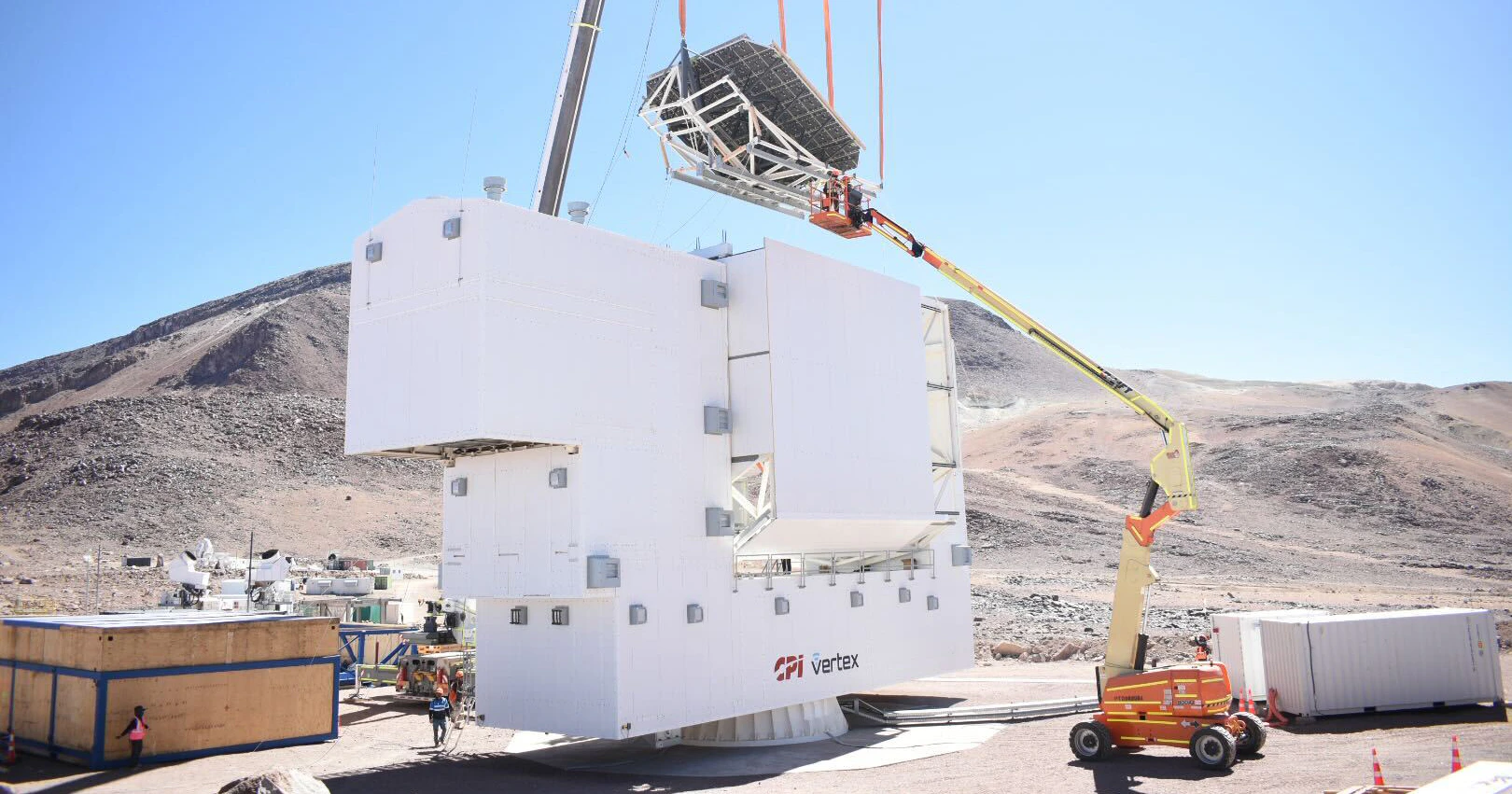

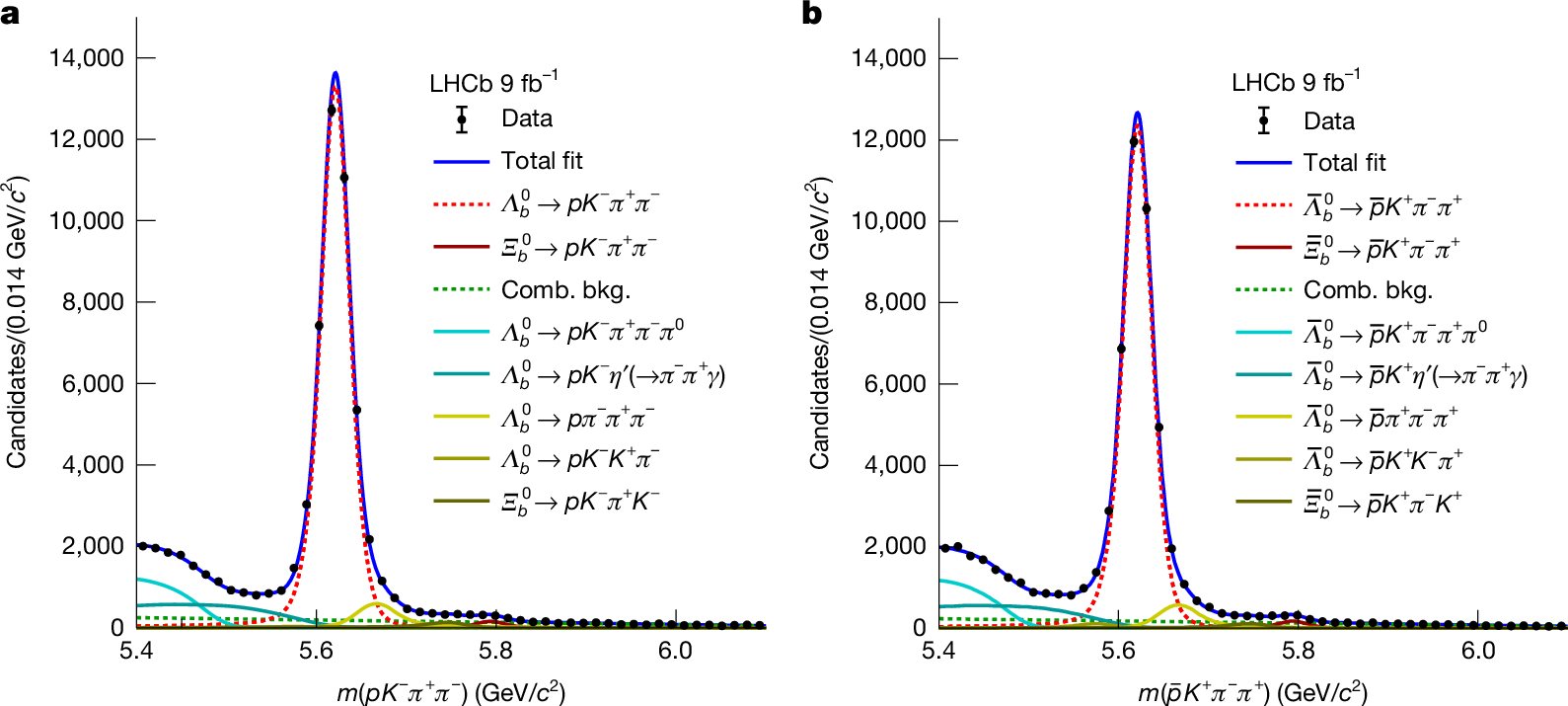

Animation design references 1 sources
These works informed the design of explanatory animations. A reference listed here is not necessarily reproduced on screen.
Scientific figure · source page 6
Creator credit under review
Original source link under reviewLicense not recordedFigure or page excerpt cropped from the source publication.
Research references
Selected sources from the episode’s research and scientific figures.
- PDG 2026 reviews index ↗
- Balkenhol et al. 2026, arXiv:2512.10613v2 ↗
- LHCb, Nature 643 (2025) ↗
- LBT helium, arXiv:2601.22238 ↗
- LBT cosmological implications, arXiv:2601.22239 ↗
- BBN sensitivity atlas, arXiv:2603.22414v2 ↗
- Data-driven D/H prediction, arXiv:2604.16600 ↗
- Planck 2018 cosmological parameters ↗
- ACT DR6 maps, arXiv:2503.14451 ↗
- SPT-3G D1 v2 ↗
- https://lambda.gsfc.nasa.gov/product/cobe/firas_monopole_spect.html ↗
- https://www.esa.int/ESA_Multimedia/Images/2018/07/Planck_s_view_of_the_cosmic_microwave_background2 ↗
- https://act.princeton.edu/overview/act-dr6-science ↗
- PDG 2025 BBN review ↗
- J1332+0052 deuterium, arXiv:2401.12797 ↗
- PDG 2026 Big-Bang Cosmology ↗
- NASA John Mather Big Bang Q&A ↗
- NASA expansion explainer ↗
- ESO molecular CMB thermometer ↗
- SH0ES SMC anchor, arXiv:2404.08038 ↗
- DES supernova time dilation, arXiv:2406.05050 ↗
- Planck 2018 inflation constraints ↗
- BICEP/Keck + Planck PR4 ↗
- Simons Observatory expanded SAT forecast, arXiv:2512.15833 ↗
- Simons Observatory first-light site ↗
- PDG 2026 Big-Bang Nucleosynthesis ↗
- PDG 2026 Cosmic Microwave Background ↗
- CERN result page ↗
- arXiv:2509.16103 ↗
- RMP baryogenesis review ↗
- Miranda lithium model, arXiv:2508.09821 ↗
- NASA LAMBDA FIRAS products ↗
- ESA Planck CMB explainer ↗
- Duration of last scattering ↗
- https://esdcdoi.esac.esa.int/doi/html/data/astronomy/planck/CMB_Maps.html ↗
- https://lambda.gsfc.nasa.gov/product/wmap/current/ ↗
Music
- Meditation From The Star Orion
OctahedronMusic · Envato Elements
How this film was made
Created and editorially directed by Anders Lunde using a custom production system developed over six months. AI assists research, drafting, programming, and visual production; I review and edit the material and make the final editorial decisions. Narration uses text-to-speech. Visuals combine custom-built scientific animations, AI-generated reconstructions, and credited scientific imagery.
Generated reconstructions illustrate scientific interpretations. They are distinct from photographs, specimens, and measured data.
More about the creator and production →