Episode 2.3 · 28 min
The Early Earth
How the early Earth cooled, developed a crust and oceans, and left fragments of its first 500 million years in ancient zircon crystals.
Watch this film on YouTube ↗Visual credits
11 sourcesVisual sources include third-party material incorporated into custom animations. License information is reproduced from source records; an unrecorded license does not mean a work is public domain.
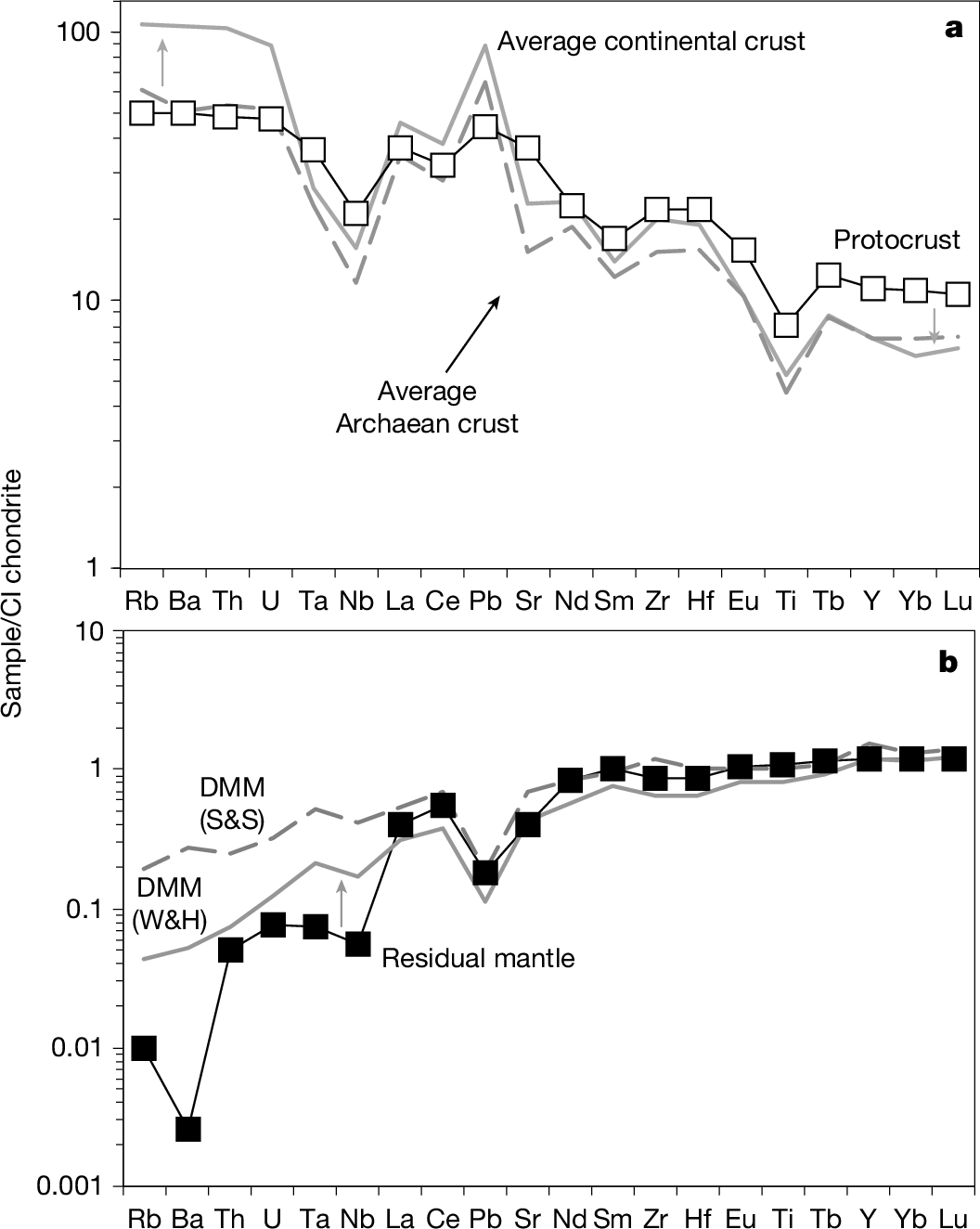
MediaObjects image
Springer Nature
View original source ↗License not recordedThe Far Side of the Moon -- And All the Way Around
GSFC
Scientific image
Creator credit under review
View original source ↗License not recordedIncorporated into an explanatory animation; presentation may include cropping, labels and overlays.
MediaObjects image
Springer Nature
View original source ↗License not recordedMediaObjects image
Springer Nature
View original source ↗License not recordedImage result for query 'Bell 2015 4.1 billion year Jack Hills zircon graphite inclusion figure'; source host: pmc.ncbi.nlm.nih.gov; file: pnas.1517557112sfig03.jpg.
Creator credit under review
View original source ↗License not recordedIncorporated into an explanatory animation; presentation may include cropping, labels and overlays.
LRO eastern limb lunar topographic map
NASA/Goddard/MIT/Brown
View original source ↗Public domainScientific image
Creator credit under review
View original source ↗License not recordedIncorporated into an explanatory animation; presentation may include cropping, labels and overlays.
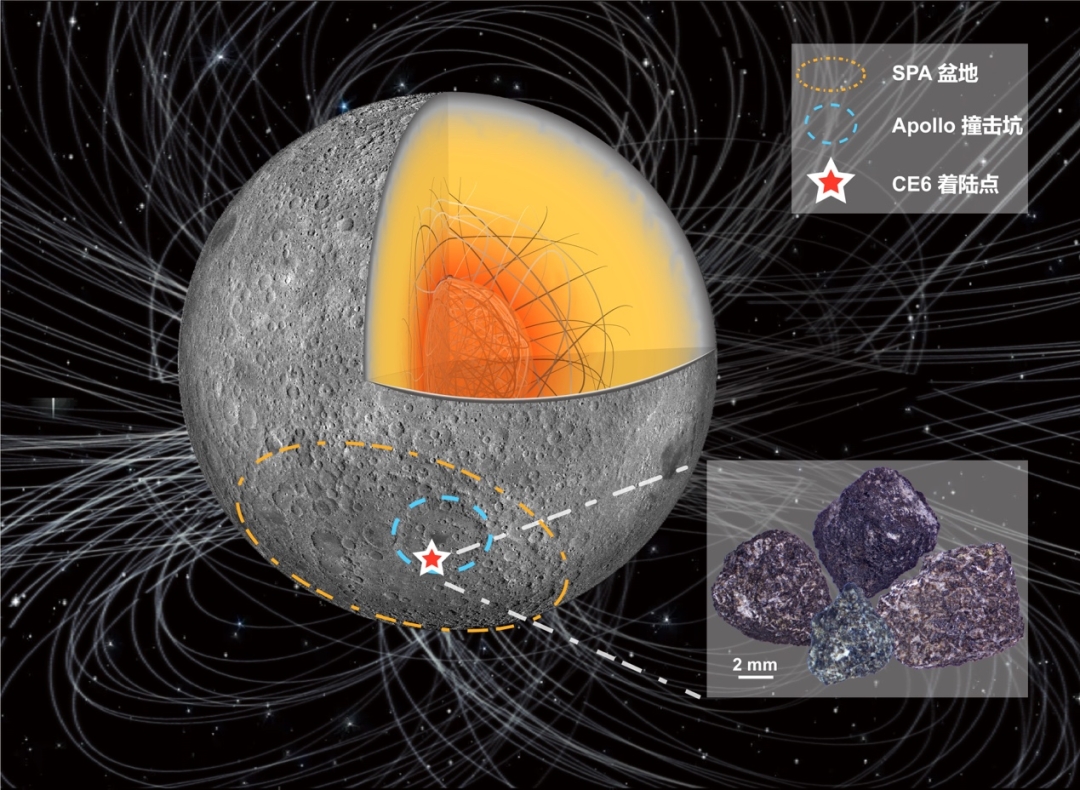
Scientific figure · source page 3
Yue et al, Chinese Academy of Sciences collaborators
Incorporated into an explanatory animation; presentation may include cropping, labels and overlays.
Scientific figure · source page 12
Zhang et al.; Chinese Academy of Sciences and Curtin collaborators
View original source ↗Copyrighted material — used for documentary commentaryFigure or page excerpt cropped from the source publication.
Editorial use; no open license asserted.
Image result for query 'ancient xenon isotope fractionation Archean barite figure Avice Marty 2017'; source host: nature.com; file: 41467_2017_Article_BFncomms15455_Fig4_HTML.jpg.
Creator credit under review
View original source ↗License not recordedIncorporated into an explanatory animation; presentation may include cropping, labels and overlays.

Research references
Selected sources from the episode’s research and scientific figures.
- https://www.nature.com/articles/ngeo2075 ↗
- https://www.nature.com/articles/s41586-025-08719-3 ↗
- https://pmc.ncbi.nlm.nih.gov/articles/PMC12871470/ ↗
- https://doi.org/10.1126/sciadv.aee8718 ↗
- https://science.nasa.gov/mission/lro/lola/ ↗
- https://www.lpi.usra.edu/lunar/samples/atlas/ ↗
- https://doi.org/10.1038/35051550 ↗
- https://doi.org/10.1016/j.epsl.2005.04.028 ↗
- https://agupubs.onlinelibrary.wiley.com/doi/10.1029/2006GC001449 ↗
- https://doi.org/10.1016/j.gca.2016.10.005 ↗
- https://pmc.ncbi.nlm.nih.gov/articles/PMC4664351/ ↗
- https://www.nature.com/articles/s41561-024-01450-0 ↗
- https://pmc.ncbi.nlm.nih.gov/articles/PMC6398955/ ↗
- https://www.nature.com/articles/nature00982 ↗
- https://doi.org/10.1016/j.gca.2009.06.023 ↗
- https://sseh.uchicago.edu/doc/Zahnle2007.pdf ↗
- https://doi.org/10.1007/s11214-007-9225-z ↗
- https://doi.org/10.1073/pnas.181020898 ↗
- https://doi.org/10.1088/2041-8205/734/1/3 ↗
- https://pmc.ncbi.nlm.nih.gov/articles/PMC2869525/ ↗
- DOI: 10.1126/science.aba1948 ↗
- barrett-2025-hydrogen ↗
- DOI: 10.1016/j.icarus.2025.116588 ↗
- https://www.nature.com/articles/s41467-025-65729-5 ↗
- https://doi.org/10.1126/science.1261952 ↗
- https://doi.org/10.1038/nature10519 ↗
- https://doi.org/10.1051/0004-6361/201935595 ↗
- https://www.nature.com/articles/s41467-025-65438-z ↗
- https://agupubs.onlinelibrary.wiley.com/doi/full/10.1029/2011RG000375 ↗
- https://arxiv.org/abs/2006.06265 ↗
- https://www.nature.com/articles/nature08955 ↗
- https://www.nature.com/articles/nature09961 ↗
- https://doi.org/10.1038/ngeo692 ↗
- https://doi.org/10.1029/2012GL054381 ↗
- https://pubmed.ncbi.nlm.nih.gov/42490427/ ↗
- https://pmc.ncbi.nlm.nih.gov/articles/PMC5047187/ ↗
- https://doi.org/10.1146/annurev-earth-063016-020131 ↗
- https://pmc.ncbi.nlm.nih.gov/articles/PMC5602003/ ↗
- https://doi.org/10.1029/2001JE001583 ↗
- https://pmc.ncbi.nlm.nih.gov/articles/PMC7043912/ ↗
- https://pmc.ncbi.nlm.nih.gov/articles/PMC5454381/ ↗
- https://doi.org/10.1016/j.gca.2018.09.017 ↗
- https://doi.org/10.1016/j.chemgeo.2021.120405 ↗
- https://agupubs.onlinelibrary.wiley.com/doi/full/10.1002/2016JE005098 ↗
- https://doi.org/10.1051/0004-6361/202243445 ↗
- https://www.lpi.usra.edu/exploration/training/illustrations/earthMoon/ ↗
- https://www.cnsa.gov.cn/n6758823/n6758838/c10639360/pic_10639360.jpg ↗
- https://svs.gsfc.nasa.gov/ ↗
- https://www.youtube.com/watch?v=Ivi1ObFGOwQ ↗
- https://www.youtube.com/watch?v=V8nxfMkzzTE: ↗
- https://www.youtube.com/watch?v=YwbK9jkQHJM: ↗
Music
- Meditation From The Star Orion
OctahedronMusic · Envato Elements
How this film was made
Created and editorially directed by Anders Lunde using a custom production system developed over six months. AI assists research, drafting, programming, and visual production; I review and edit the material and make the final editorial decisions. Narration uses text-to-speech. Visuals combine custom-built scientific animations, AI-generated reconstructions, and credited scientific imagery.
Generated reconstructions illustrate scientific interpretations. They are distinct from photographs, specimens, and measured data.
More about the creator and production →